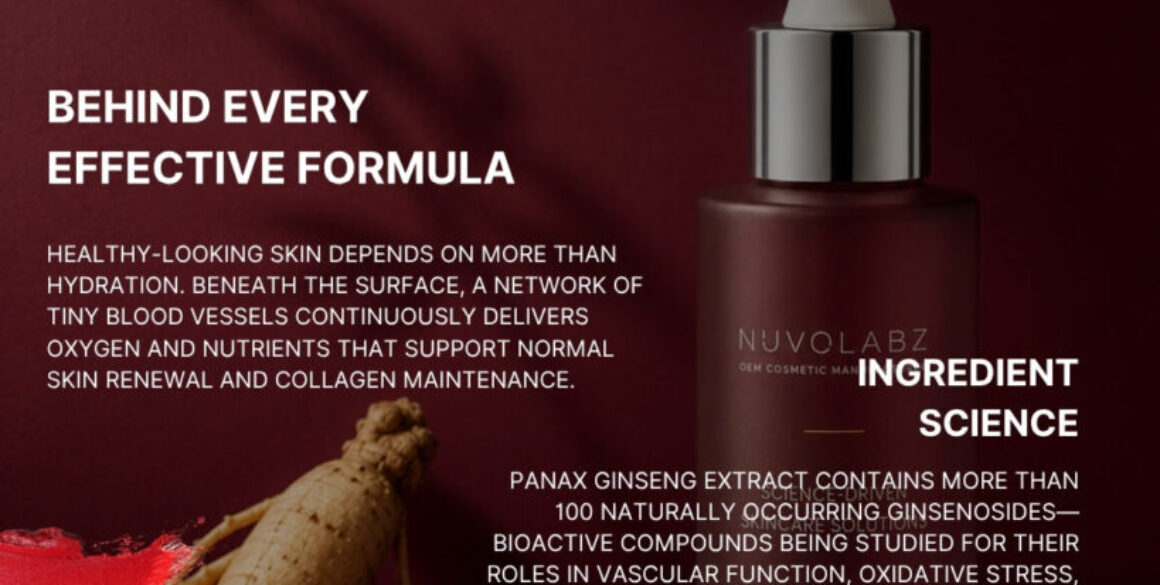
Healthy-looking skin depends on more than hydration alone. Every day, skin cells rely on a continuous supply of oxygen and nutrients delivered through an extensive network of tiny blood vessels known as the dermal microcirculation. This microvascular system supports cellular metabolism, tissue repair, collagen production, and the skin’s natural renewal process.
Among the botanical ingredients studied for their interaction with these biological processes, Panax ginseng extract has attracted considerable scientific interest. Rather than acting through a single mechanism, its activity is largely attributed to a diverse group of naturally occurring compounds called ginsenosides, which have been investigated for their effects on inflammation, oxidative stress, skin aging, and vascular function.
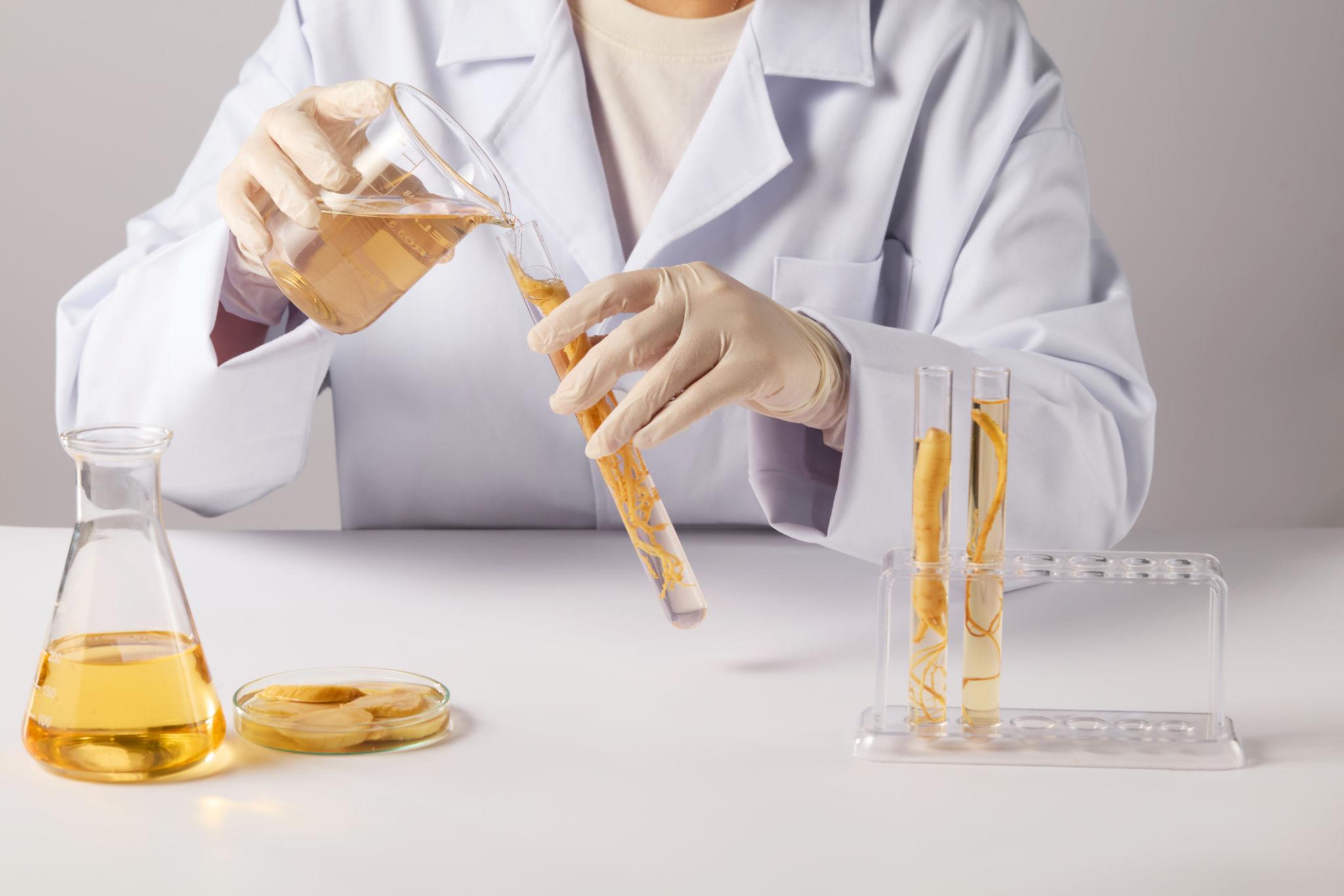
What Are Ginsenosides?
Ginsenosides are the primary bioactive compounds found in Panax ginseng. Chemically, they belong to a class of molecules known as triterpene saponins. More than 100 different ginsenosides have been identified, with commonly studied examples including Rb1, Rg1, Rg3, Rd, Re, and compound K.
Each ginsenoside has a slightly different molecular structure, allowing it to interact with different biological pathways. Because of this, researchers generally attribute the skin-related effects of Panax ginseng to the combined activity of multiple ginsenosides rather than to a single compound.
Why Microcirculation Matters for Skin
The skin contains an intricate network of microscopic blood vessels located primarily within the dermis. These vessels deliver:
- Oxygen required for cellular energy production
- Glucose and amino acids needed for metabolism
- Vitamins and minerals involved in tissue repair
- Immune cells that support normal healing processes
Fibroblasts—the cells responsible for producing collagen and elastin—depend on this continuous nutrient supply to function efficiently. While normal aging naturally affects the microvascular network, reduced circulation can also contribute to slower skin renewal and decreased support for collagen maintenance over time.
Maintaining healthy microcirculation is therefore considered an important component of overall skin physiology, although it is only one of many factors involved in skin aging.
How Ginsenosides Interact with the Skin’s Microvascular System
Research suggests that several ginsenosides may influence signaling pathways involved in vascular function.
Experimental studies have shown that certain ginsenosides can stimulate the production of nitric oxide (NO) within endothelial cells—the specialized cells lining blood vessels. Nitric oxide acts as a signaling molecule that helps regulate normal blood vessel relaxation, allowing blood to flow more efficiently through the microvasculature.
Although much of this evidence comes from laboratory and preclinical studies rather than cosmetic clinical trials, this vascular activity is considered one of the proposed mechanisms through which Panax ginseng may support healthy skin physiology.

Supporting Fibroblast Function
Improved nutrient availability alone does not directly increase collagen production. However, fibroblasts require adequate oxygen and nutrients to carry out normal collagen synthesis and extracellular matrix maintenance.
In laboratory studies, several ginsenosides have also demonstrated biological activities that may further support fibroblast health by:
- Reducing oxidative stress
- Modulating inflammatory signaling pathways
- Influencing enzymes involved in collagen metabolism
- Supporting extracellular matrix homeostasis
These mechanisms are being actively investigated as potential contributors to healthier skin aging.
The Connection Between Ginsenosides and Collagen Preservation
Skin aging involves a gradual imbalance between collagen production and collagen breakdown.
One important group of enzymes involved in collagen degradation is the matrix metalloproteinases (MMPs). Ultraviolet (UV) exposure, oxidative stress, and chronic inflammation can increase MMP activity, accelerating collagen loss.
Multiple laboratory studies have reported that certain ginsenosides may reduce the expression of MMPs while helping regulate signaling pathways associated with inflammation and oxidative damage. By moderating these biological processes, ginsenosides may help support the skin’s natural collagen preservation mechanisms.
It is important to note that these findings primarily come from cell culture and animal models. More high-quality human clinical studies are needed to determine the magnitude of these effects in topical skincare products.
More Than Just Circulation
Modern research suggests that the potential skin benefits of Panax ginseng extend beyond microcirculation alone. Ginsenosides have also been investigated for their ability to:
- Help reduce oxidative stress caused by reactive oxygen species (ROS)
- Modulate inflammatory pathways involved in skin aging
- Support skin barrier function
- Promote normal skin regeneration
- Influence pigmentation-related pathways in experimental models
These multiple biological activities are why Panax ginseng continues to be studied as a promising botanical ingredient in dermatology and cosmetic science. However, researchers consistently emphasize that laboratory findings should not be interpreted as guaranteed clinical outcomes for every skincare formulation.

What Does the Current Evidence Tell Us?
Current scientific evidence supports the idea that ginsenosides are biologically active compounds capable of interacting with several pathways relevant to skin health, including vascular regulation, oxidative stress, inflammation, and collagen metabolism.
However, it is equally important to recognize the current limitations of the evidence. Many published studies have been conducted in cell cultures, animal models, or laboratory settings. While these findings provide valuable mechanistic insights, they do not necessarily predict the same magnitude of benefit in human topical skincare products.
Future randomized clinical trials will help clarify how different concentrations, formulations, and types of ginseng extract perform under real-world conditions.
Final Thoughts
Panax ginseng extract represents an ingredient with a well-characterized group of bioactive compounds known as ginsenosides. Current research suggests these molecules may support healthy skin by interacting with pathways involved in dermal microcirculation, vascular function, inflammation, oxidative stress, and collagen preservation.
Rather than functioning as a direct “collagen booster,” ginsenosides appear to create a biological environment that may help support the skin’s normal maintenance and repair processes. As research continues, Panax ginseng remains one of the most extensively studied botanical ingredients in modern skincare science.
References
- Lim TG, Lee CC, Dong Z, Lee KW. Ginsenosides and Their Metabolites: A Review of Their Pharmacological Activities in the Skin. Archives of Dermatological Research. 2015;307(5):397–403.
- You L, Hu Y, Zhang Z, et al. Cellular and Molecular Regulation of Skin by Ginseng and Its Bioactive Constituents: A Review of Studies from 2021 to 2025. Journal of Ginseng Research. 2026.
- Zhang Y, Cong X, Miao H, et al. Effect of Anti-Skin Disorders of Ginsenosides: A Systematic Review. Journal of Ginseng Research. 2023.