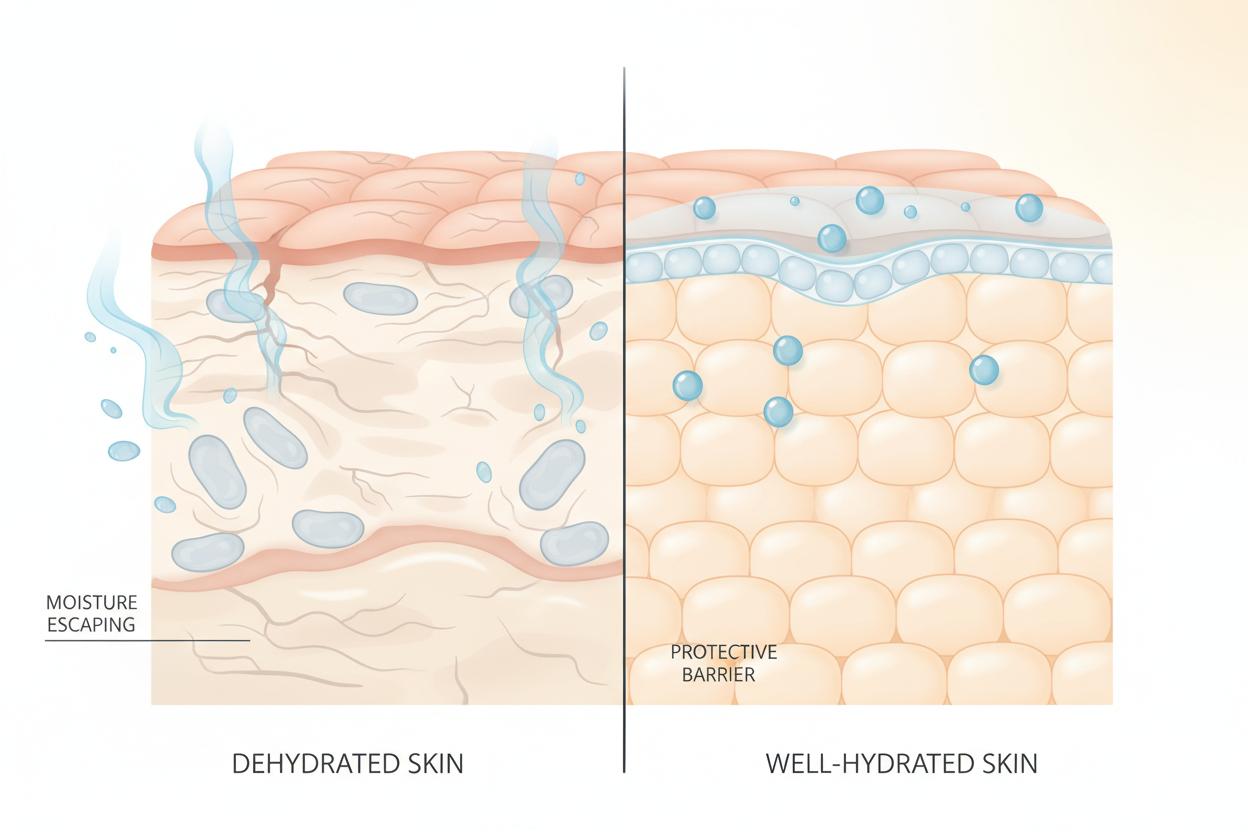
Healthy skin depends on more than just hydration—it also relies on a well-structured protective barrier. This barrier, located within the outermost layer of the skin (the stratum corneum), helps prevent excessive water loss while shielding the body from environmental irritants, microorganisms, and pollutants. When this barrier is compromised by harsh weather, excessive cleansing, aging, or cosmetic procedures, the skin may become dry, sensitive, and more susceptible to irritation.
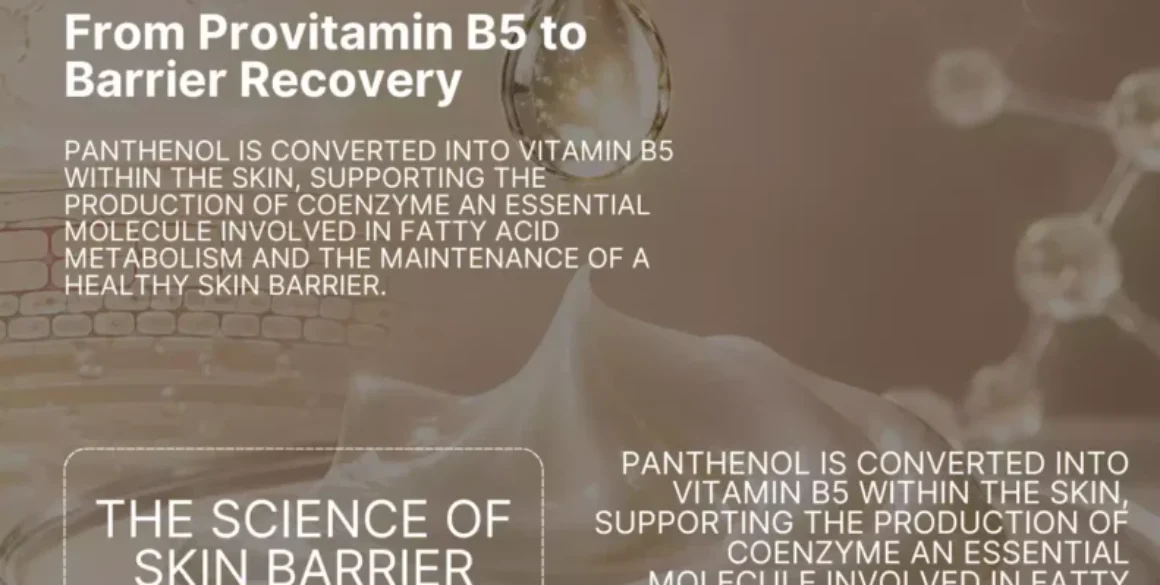
Among the ingredients commonly incorporated into restorative skincare formulations, panthenol, also known as provitamin B5, has earned considerable scientific attention for its ability to support skin barrier recovery. While panthenol is widely recognized as an effective humectant, its biological significance extends beyond hydration. Once absorbed into the skin, panthenol is converted into pantothenic acid (vitamin B5)—an essential nutrient involved in cellular metabolism and the production of Coenzyme A (CoA), a molecule required for numerous biochemical processes that help maintain healthy skin. 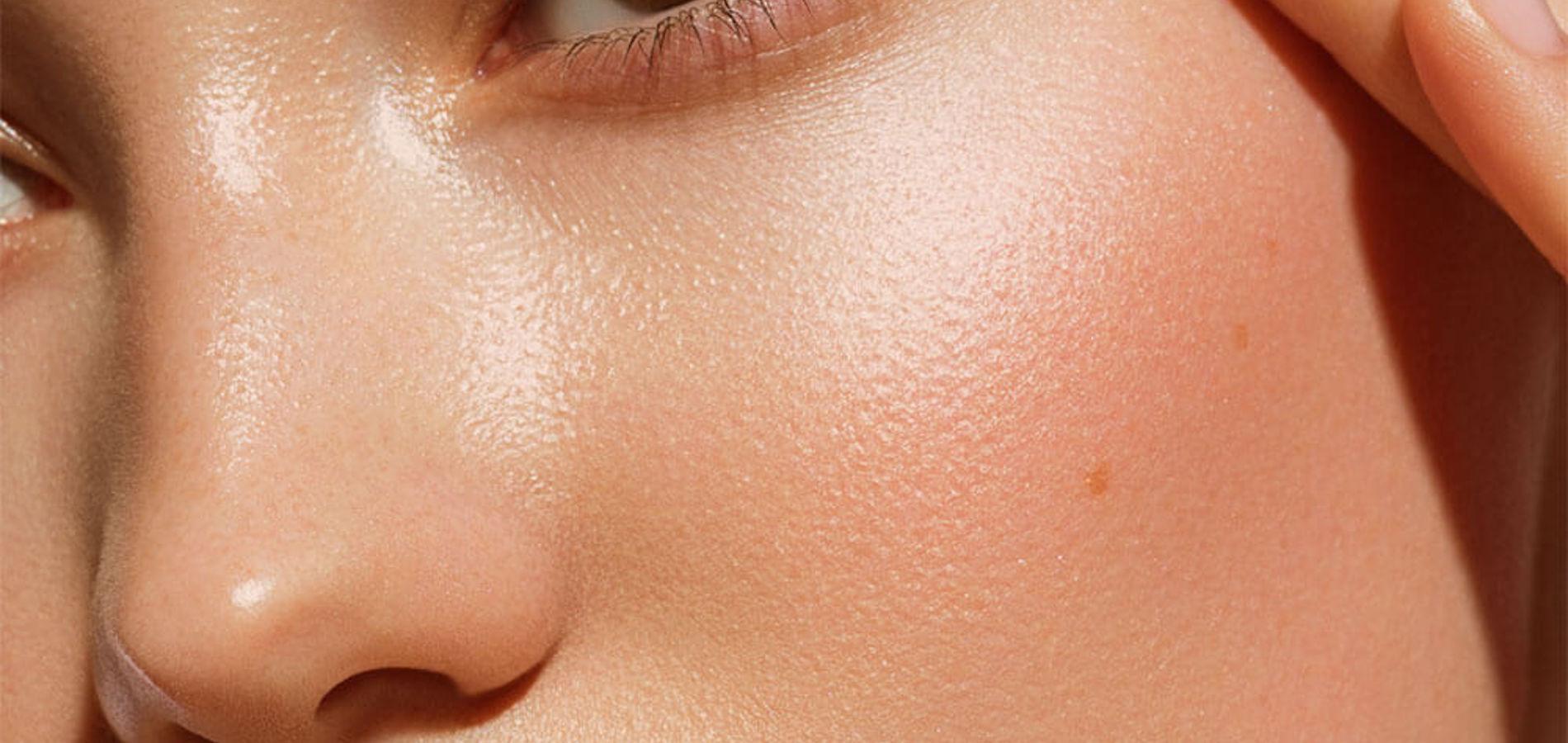
Understanding the Skin’s Lipid Barrier
The outermost layer of the epidermis is often compared to a brick wall. The skin cells (corneocytes) serve as the “bricks,” while a specialized mixture of lipids—including ceramides, cholesterol, and free fatty acids—forms the “mortar” that holds these cells together.
This lipid matrix performs several essential functions:
- Reduces transepidermal water loss (TEWL)
- Protects against environmental irritants
- Supports skin flexibility and resilience
- Helps maintain a balanced skin microbiome
When the lipid barrier is disrupted, water escapes more easily from the skin, leading to dryness, roughness, and increased sensitivity. Supporting the skin’s natural lipid production is therefore a key objective of barrier-repair skincare.
From Provitamin B5 to Pantothenic Acid
Panthenol is the alcohol analogue of pantothenic acid and is often referred to as provitamin B5. After topical application, panthenol readily penetrates the stratum corneum because of its favorable physicochemical properties.
Within the skin, panthenol is enzymatically oxidized into pantothenic acid, the biologically active form of vitamin B5. Unlike many cosmetic ingredients that primarily act on the skin’s surface, this conversion enables panthenol to participate in the skin’s normal metabolic pathways.
Pantothenic acid is an essential nutrient because human cells cannot synthesize it independently. Instead, it serves as the starting material for producing one of the body’s most important metabolic molecules: Coenzyme A (CoA).
Why Coenzyme A Matters
Coenzyme A is a small but indispensable coenzyme found in virtually every living cell. It participates in hundreds of enzymatic reactions involved in energy production and the synthesis of biologically important molecules.
In the skin, Coenzyme A contributes to several processes relevant to barrier maintenance, including:
- Fatty acid metabolism
- Fatty acid synthesis
- Cellular energy production
- Production of structural lipids required by the epidermis
Because the skin is continually renewing itself, these metabolic activities are essential for maintaining normal epidermal function.
Supporting the Production of Essential Skin Lipids
One of the most important roles of Coenzyme A is its involvement in fatty acid metabolism. Fatty acids serve as building blocks for several lipid classes that contribute to the skin barrier, including ceramides and other sphingolipids.
Ceramides represent approximately half of the lipids found in the stratum corneum by mass and are considered essential for maintaining barrier integrity. They help fill the spaces between corneocytes, creating a cohesive structure that minimizes water loss and improves resistance to external stressors.
By supplying the precursor needed for Coenzyme A synthesis, panthenol supports the biochemical pathways involved in producing these structural lipids. Rather than acting as a direct source of ceramides, panthenol helps support the skin’s own metabolic processes that contribute to healthy barrier function.
More Than Barrier Support: Hydration and Comfort
Panthenol also provides direct cosmetic benefits independent of its metabolic role.
As a humectant, panthenol attracts and retains moisture within the outer layers of the skin, helping improve hydration. Studies have shown that topical panthenol can increase stratum corneum hydration while reducing transepidermal water loss, supporting smoother and softer skin.
Research has also demonstrated that formulations containing panthenol may improve skin barrier recovery following irritation or minor barrier disruption. These effects are thought to arise from a combination of improved hydration and support for normal epidermal repair processes.
Why Formulators Continue to Choose Panthenol
Panthenol has remained a staple ingredient in dermatological and cosmetic formulations because it offers multiple complementary functions:
- Supports normal skin barrier recovery
- Helps maintain skin hydration
- Reduces moisture loss by supporting barrier function
- Contributes to softer, smoother-feeling skin
- Suitable for formulations intended for dry or sensitive skin
Its excellent compatibility with many other moisturizing and barrier-supporting ingredients also makes it highly versatile across different skincare formats.
Featured in Restorative Skincare Formulations
Because barrier repair requires both hydration and support for normal skin function, panthenol is frequently included in products designed for intensive skin recovery.
Cream-Hydration
In rich moisturizing creams, panthenol helps reinforce hydration while supporting the skin’s natural barrier function. Combined with emollients and other moisturizing ingredients, it contributes to formulations intended to relieve dryness and improve skin comfort.
Crystal Gel Mask – Skin Repair
Leave-on gel masks are designed to provide prolonged contact with the skin, allowing humectants and conditioning ingredients to remain on the surface for extended periods. Incorporating panthenol into these formulations helps maintain hydration while supporting normal skin barrier recovery after exposure to environmental stress or temporary dryness.
The Science Behind Barrier Recovery
Healthy skin depends on a complex interaction between hydration, lipid organization, and cellular metabolism. Panthenol contributes to this process through two complementary mechanisms: it functions as an effective humectant on the skin’s surface while also serving as a precursor to pantothenic acid, an essential component in the synthesis of Coenzyme A.
Because Coenzyme A participates in the metabolic pathways required for fatty acid and lipid production, panthenol supports the skin’s natural ability to maintain its protective barrier. Rather than offering a temporary surface effect alone, it helps sustain the biological processes that underpin long-term skin barrier health.
For formulators developing moisturizers, repair creams, and intensive treatment masks, panthenol remains one of the most scientifically supported ingredients for promoting hydration and supporting the skin’s natural barrier function.
References
- Ebner F, Heller A, Rippke F, Tausch I. Topical use of dexpanthenol in skin disorders. American Journal of Clinical Dermatology. 2002;3(6):427–433.
- Proksch E, de Bony R, Trapp S, Boudon S. Topical use of dexpanthenol: A 70th anniversary article. Journal of Dermatological Treatment. 2017;28(8):766–773.
- Wertz PW. Lipids and barrier function of the skin. Acta Dermato-Venereologica. 2000;80(Suppl 208):7–11.
- Elias PM. Skin barrier function. Current Allergy and Asthma Reports. 2008;8(4):299–305.
- Lodén M. The clinical benefit of moisturizers. Journal of the European Academy of Dermatology and Venereology. 2005;19(6):672–688.
- National Center for Biotechnology Information. Pantothenic Acid (Vitamin B5). StatPearls Publishing. https://www.ncbi.nlm.nih.gov/books/NBK470551/
- National Center for Biotechnology Information. Coenzyme A metabolism and function. https://www.ncbi.nlm.nih.gov/books/
- Madison KC. Barrier function of the skin: “La Raison d’Être” of the epidermis. Journal of Investigative Dermatology. 2003;121(2):231–241.