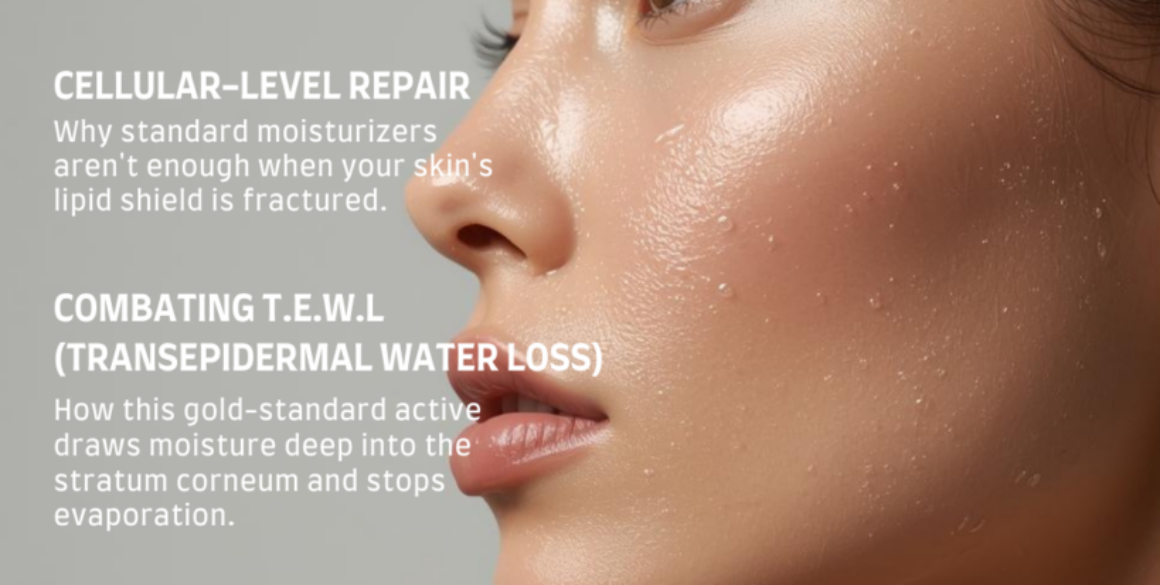
If you have ever experienced the stinging, redness, and flakiness of a compromised skin barrier—whether from harsh weather, over-exfoliation, or intensive clinical treatments—you know that standard moisturizers often aren’t enough. When the skin’s lipid shield is fractured, it needs more than superficial hydration; it requires cellular-level repair.
Enter Panthenol (Pro-Vitamin B5). While trendy ingredients come and go, Panthenol remains a gold-standard active in dermatological science. Here is the science behind why this powerhouse ingredient is essential for deep skin barrier repair and sustained moisture retention.
The Science: How Panthenol Transforms in the Skin
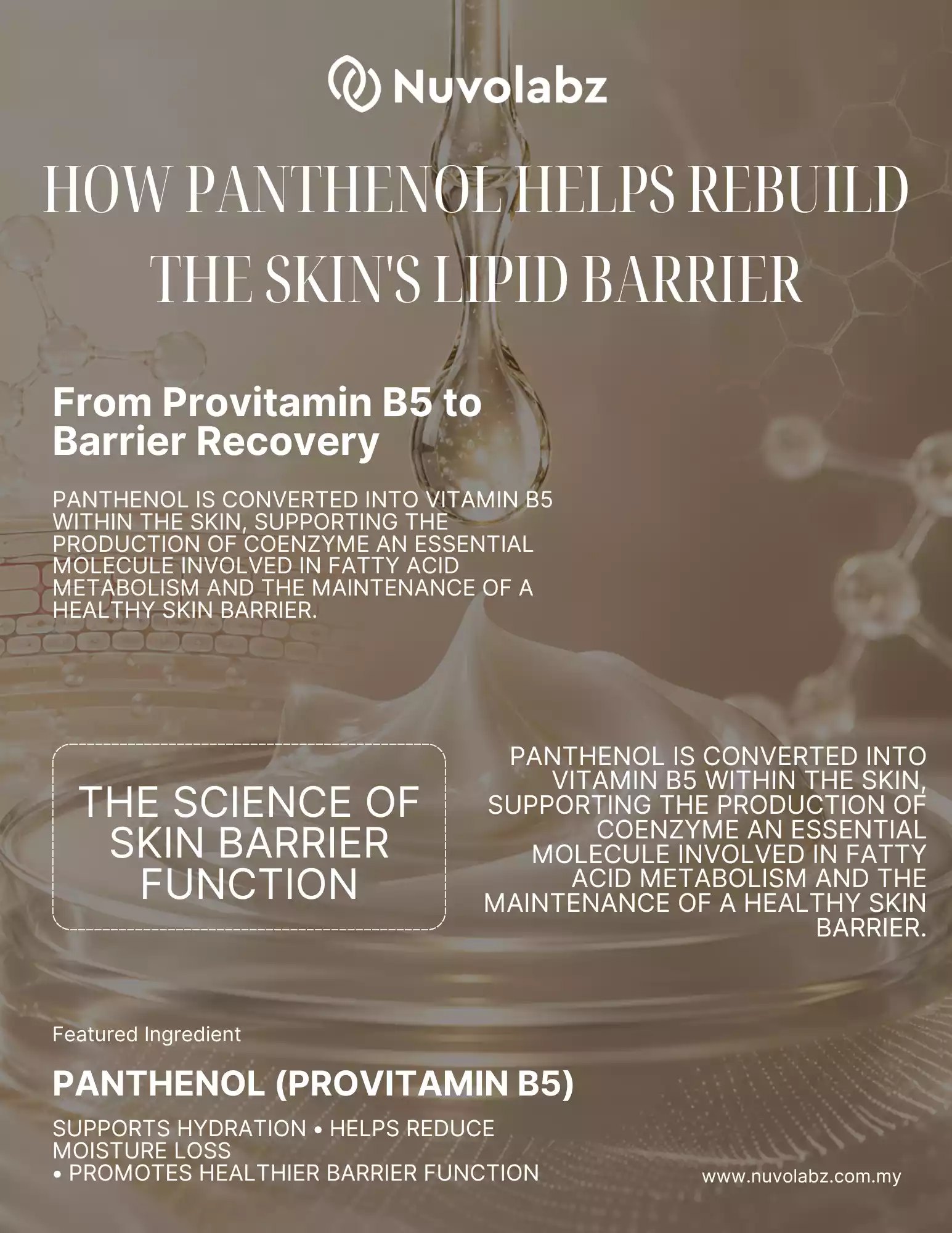
Panthenol is the biologically active alcohol analog of pantothenic acid (Vitamin B5). Its true power lies in its bioavailability. When applied topically, Panthenol penetrates the lower skin layers and rapidly converts to pantothenic acid.
This conversion is critical. Pantothenic acid is an essential precursor to Coenzyme A (CoA), a vital element in cellular metabolism. By boosting CoA levels, Panthenol directly stimulates the synthesis of essential epidermal lipids (like ceramides and cholesterol) and accelerates the proliferation of fibroblasts—the cells responsible for generating new, healthy connective tissue.
4 Proven Clinical Benefits of Pro-Vitamin B5
For skin recovering from chemical peels, laser treatments, or severe barrier damage, Panthenol offers a multi-targeted approach to healing:
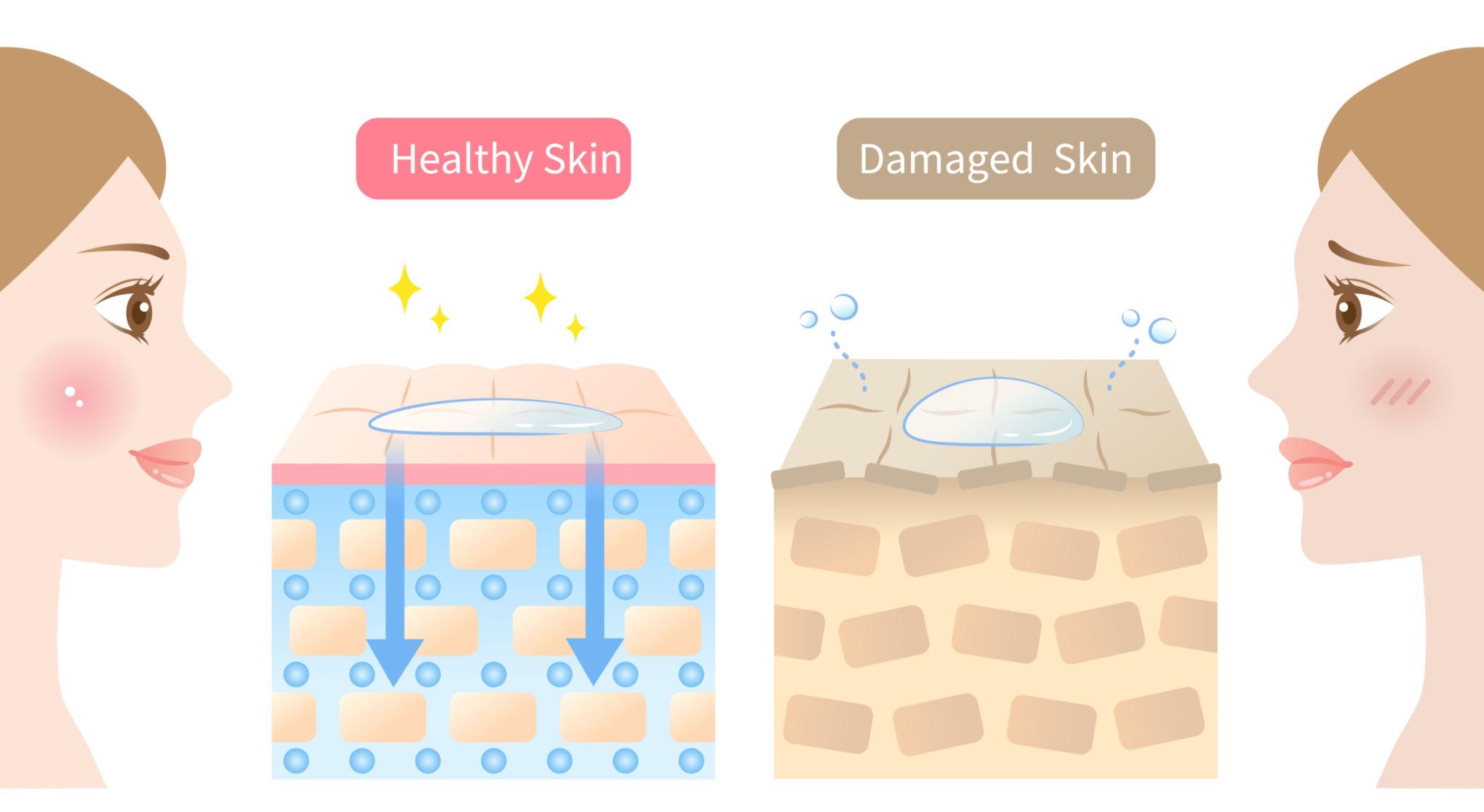
- 1. Reduces Transepidermal Water Loss (TEWL): Unlike simple humectants that only attract water, Panthenol acts as both a humectant and an emollient. It draws moisture deep into the stratum corneum while simultaneously sealing the cracks in the lipid matrix, drastically reducing the amount of water that evaporates from the skin (TEWL).
- 2. Enhances Lipid Barrier Repair: By driving the production of specialized skin lipids, Panthenol structurally reinforces the skin’s outer shield. A stronger barrier means environmental aggressors, bacteria, and irritants are kept out, while vital hydration is locked inside.
- 3. Powerful Anti-Inflammatory Properties: Clinical studies demonstrate that Panthenol significantly reduces erythema (redness) and calms irritation. It suppresses inflammatory pathways, making it highly tolerable and profoundly soothing for reactive, sensitive, or rosacea-prone skin.
- 4. Accelerated Healing Support (The Post-Treatment Hero): Because it stimulates fibroblast proliferation and cellular turnover, Panthenol drastically cuts down the downtime required after intensive clinical procedures. It helps re-epithelialize the skin, meaning it helps to quite literally build new skin over wounds and micro-tears faster.
How to Incorporate Panthenol into Your Routine
To leverage the full barrier-building and post-treatment benefits of Pro-Vitamin B5, consistency and formulation matter. We utilize clinical-grade Panthenol in our targeted repair formulations:
- For Daily Barrier Defense: Our Hydration Cream utilizes Panthenol to provide all-day moisture retention. It is engineered to keep TEWL low while sitting beautifully under makeup, making it your daily shield against environmental stressors.
- For Intensive Post-Treatment Recovery: When your skin is highly reactive or recovering from a procedure, our Skin Repair Gel Mask acts as a cooling, anti-inflammatory rescue treatment. Packed with concentrated Pro-Vitamin B5, it instantly lowers skin temperature, reduces redness, and floods the cells with the necessary building blocks for rapid healing.
The Bottom Line
A healthy skin barrier is the foundation of a flawless complexion. Whether you are recovering from an intensive aesthetic treatment or simply trying to survive a harsh climate, Panthenol provides the scientifically proven, structural support your skin needs to heal, hydrate, and thrive.
References
- Proksch, E., de Bony, R., Trapp, S., & Boudon, S. (2017). Topical use of dexpanthenol: a 70th anniversary article. Journal of Dermatological Treatment, 28(8), 766-773.
- Camargo, F. B., Gaspar, L. R., & Maia Campos, P. M. (2011). Skin moisturizing effects of panthenol-based formulations. Journal of Cosmetic Science, 62(4), 361-369.
- Ebner, F., Heller, A., Rippke, F., & Tausch, I. (2002). Topical use of dexpanthenol in skin disorders. American Journal of Clinical Dermatology, 3(6), 427-433.
- Marquardt, Y., et al. (2015). Dexpanthenol enhances skin barrier repair and reduces inflammation after sodium lauryl sulphate-induced irritation. Journal of Dermatological Science, 77(3), 164-172.