

Snail secretion filtrate — sometimes called snail mucin — has become more than a trend. What once was popularized by Korean skincare has now entered the realm of biological science and tissue regeneration research. For formulators, scientists, and cosmetic brands seeking credible, effective ingredients, snail secretion offers a compelling combination of structural biochemicals and regenerative cues that align with core dermatological processes.
What Is Snail Secretion Filtrate?
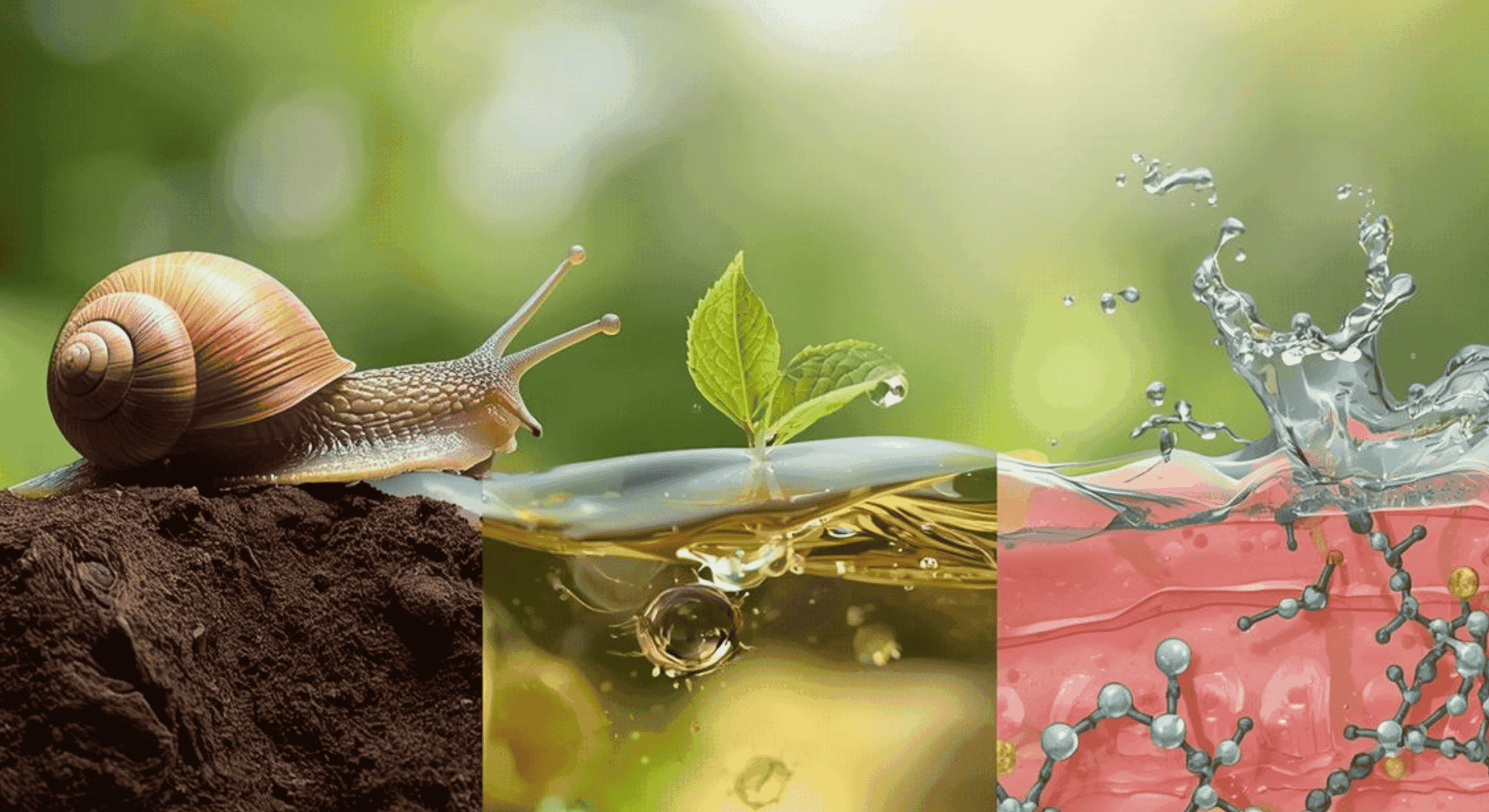
Snail secretion filtrate is a natural biofluid produced by gastropods (e.g., Helix aspersa). When gently harvested and filtered, it contains a complex mixture of:
- Glycoproteins and mucins
- Glycosaminoglycans (GAGs)
- Hyaluronic acid (HA)
- Small peptides and growth-factor-like signals
- Allantoin, antimicrobial peptides, and glycolic acid
- Minerals and antioxidants
This unique biochemical cocktail supports several skin functions — from hydration to regeneration — at the molecular level.
How Snail Secretion Interacts with Skin Biology
- Extracellular Matrix (ECM) Repair and Skin Regeneration
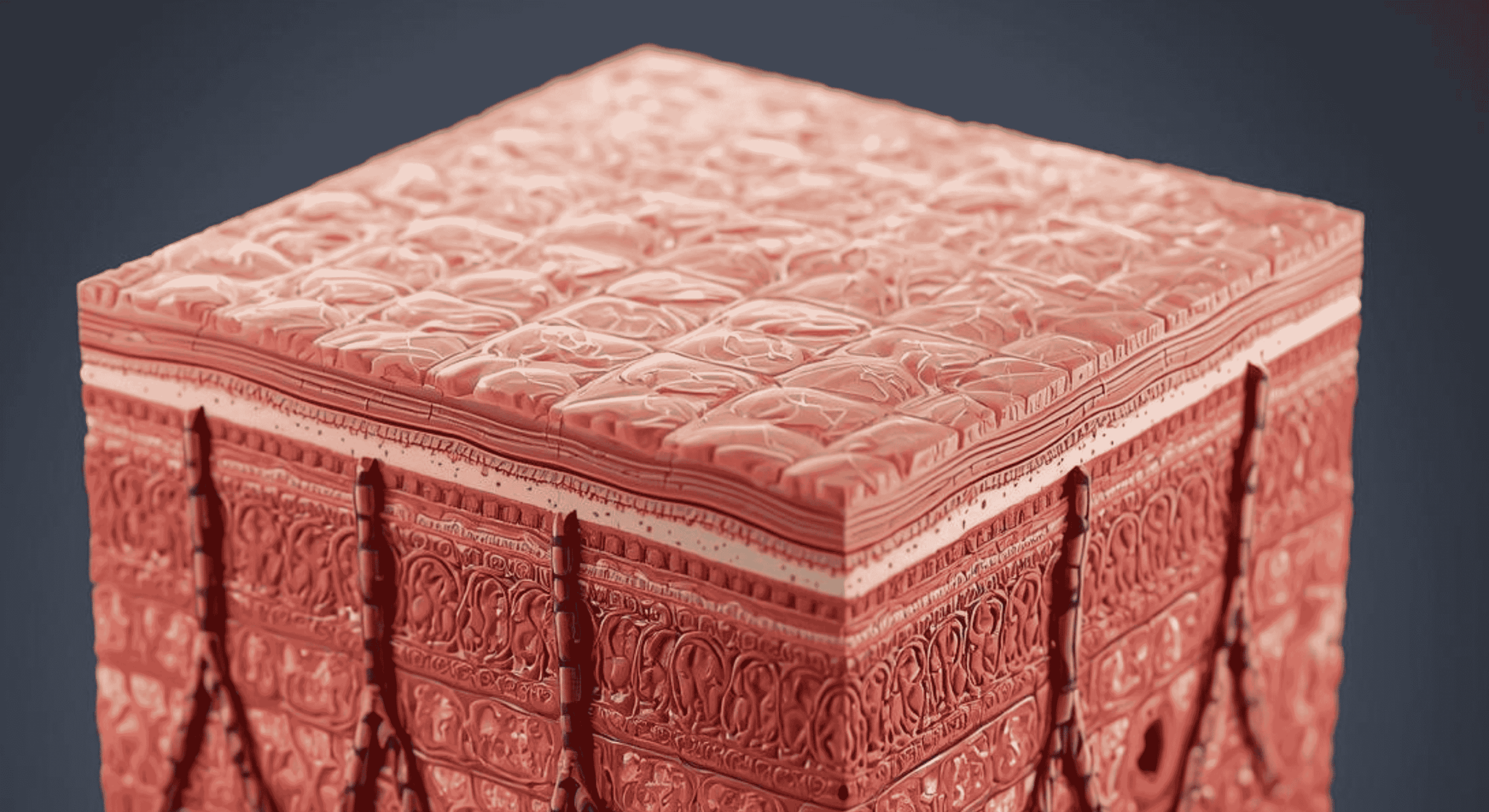
The ECM is a dynamic network of collagen, elastin, proteoglycans, and glycosaminoglycans that provides mechanical support and signaling for skin cells. Healthy ECM is essential for elasticity, firmness, and wound healing.
Research shows that snail secretion’s bioactive components can stimulate fibroblast proliferation, collagen synthesis, and ECM remodeling — key parts of the regeneration process. In experimental studies, snail mucus enhanced all phases of wound healing by:
- Encouraging fibroblast migration and tissue regrowth
- Increasing collagen deposition
- Supporting extracellular matrix restructuring
- Promoting a beneficial anti-inflammatory environment
- Controlling microbial growth at the wound site
These effects are attributed in part to snail-derived glycoproteins, glycosaminoglycans, and peptide signals that interact with skin repair pathways.
In some studies, active peptides from snail mucus were shown to enhance endothelial cell proliferation and angiogenesis, essential steps in tissue regeneration and nutrient delivery to healing skin.
- Glycosaminoglycans: Structural and Moisture-Binding Support
Glycosaminoglycans — long carbohydrate chains present in ECM — play a structural and moisturizing role by binding water and supporting the skin’s internal scaffolding.
Snail secretion naturally contains GAGs and polysaccharides that can:
- Mimic aspects of the ECM
- Promote cell attachment and matrix stability
- Help modulate inflammatory responses
- Enhance hydration by retaining water within dermal layers
Biomedical studies inspired by snail mucus have even leveraged sulfated glycosaminoglycans to create hydrogels that accelerate wound healing, illustrating how these molecules guide tissue repair beyond superficial hydration.
- Hydration + Regeneration: Mechanisms Beyond Marketing
Hydration is the foundation of healthy skin — yet many claims reduce it to “plumping” without mechanism. Snail secretion supports hydration on a biological level by:
- Providing hyaluronic acid, a well-studied humectant capable of holding large amounts of water
- Supporting glycosaminoglycan synthesis within the dermis
- Helping restore barrier function and reduce transepidermal water loss
Topical applications of snail filtrate have been linked to improved skin moisture levels, elasticity, and barrier recovery after clinical procedures. These effects stem from a combination of moisture retention and regenerative signaling rather than surface occlusion alone.
Growth Signals and Bioactivity: Why This Is More Than a Moisturizer
Snail secretion doesn’t just sit on the skin; it interacts with biological systems:
- Glycoproteins and mucins provide structural support and cellular adhesion
- Small peptides may act as signaling molecules influencing cell proliferation and migration
- Allantoin and glycolic acid contribute to cell turnover, soothing, and regenerative pathways
- Antimicrobial peptides help prevent infection during early wound healing
Importantly, studies have detected molecules in snail filtrate that resemble growth factor activity, such as fibroblast growth factor (FGF)-like effects, suggesting that snail-derived biomaterials can modulate key repair pathways at the cellular level.
Safety and Effective Use in Formulations
While expert reviews acknowledge promising regenerative and hydration properties, they also emphasize:
- The need for standardized extraction and processing
- Thorough safety and irritation testing
- Regulatory evaluation to substantiate claims
These scientific considerations align with responsible formulation — ensuring both efficacy and consumer trust.
Convergence of Nature and Science
Snail secretion filtrate is not just a skincare buzzword. Its biochemical richness — from glycosaminoglycans and growth signals to hydration polymers — correlates with fundamental skin biology:
- Hydration through osmotic and structural support
- ECM repair via fibroblast and collagen modulation
- Regenerative signaling with peptides and growth-like factors
For brands and formulators aiming for science-backed efficacy, snail secretion represents a biomimetic bridge between natural complexity and dermatological function.
References
- Fabi, S. G., Cohen, J. L., Peterson, J. D., Kiripolsky, M. G., Goldman, M. P. (2013). The effects of snail secretion filtrate on photoaged skin. Journal of Drugs in Dermatology, 12(4), 453–457.
- Briganti, S., Camera, E., & Picardo, M. (2003). Chemical and instrumental approaches to treat hyperpigmentation. Pigment Cell Research, 16(2), 101–110.
- Kim, Y. J., Lee, H. J., Kim, Y. A., et al. (2015). Snail secretion filtrate promotes wound healing in vitro and in vivo. International Journal of Cosmetic Science, 37(5), 1–9.
- Ramos-e-Silva, M., & Celem, L. R. (2013). Snail secretion and its dermatological potential. Clinics in Dermatology, 31(6), 1–6.
- Brown, M. B., Jones, S. A. (2005). Hyaluronic acid: A unique topical vehicle for the localized delivery of drugs to the skin. Journal of the European Academy of Dermatology and Venereology, 19(3), 308–318.
- Theocharis, A. D., Skandalis, S. S., Gialeli, C., Karamanos, N. K. (2016).
Extracellular matrix structure. Advanced Drug Delivery Reviews, 97, 4–27. - Chen, W. Y. J., & Abatangelo, G. (1999).
Functions of hyaluronan in wound repair. Wound Repair and Regeneration, 7(2), 79–89. - Morganti, P., & Coltelli, M. B. (2019). A new carrier for advanced cosmeceuticals. Journal of Applied Cosmetology, 37, 1–15.
- European Commission – SCCS (2018). Notes of guidance for the testing of cosmetic ingredients and their safety evaluation.