

What Is Andrographis Paniculata?
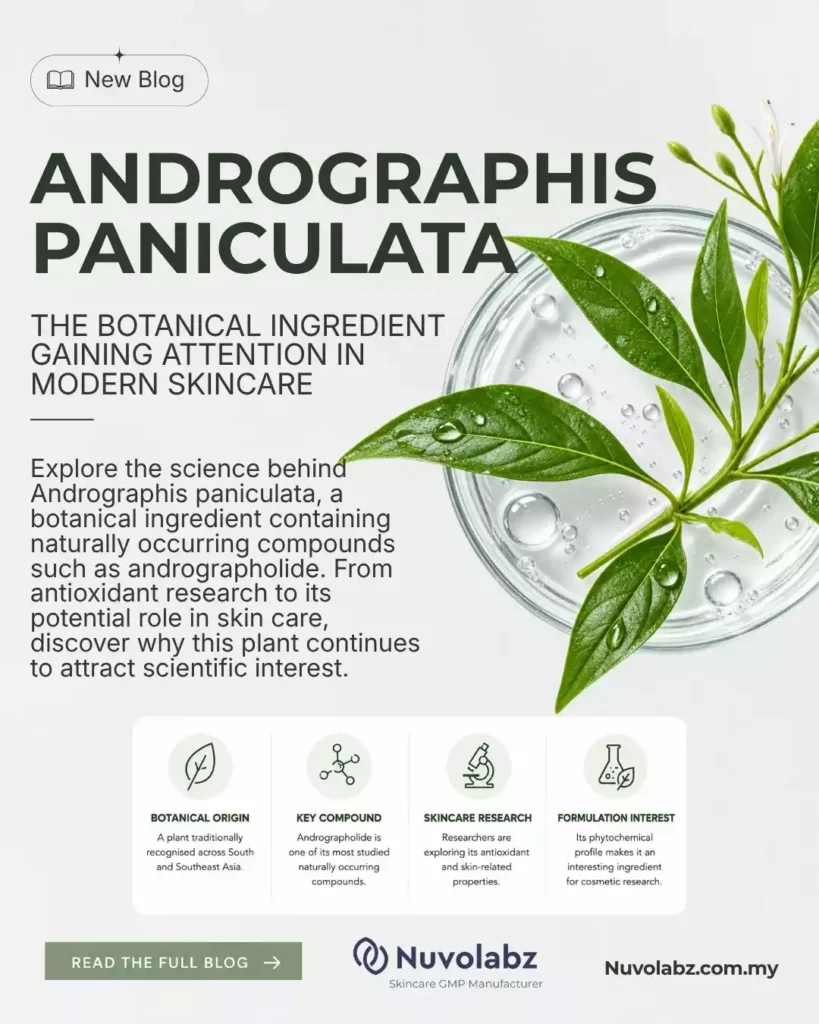
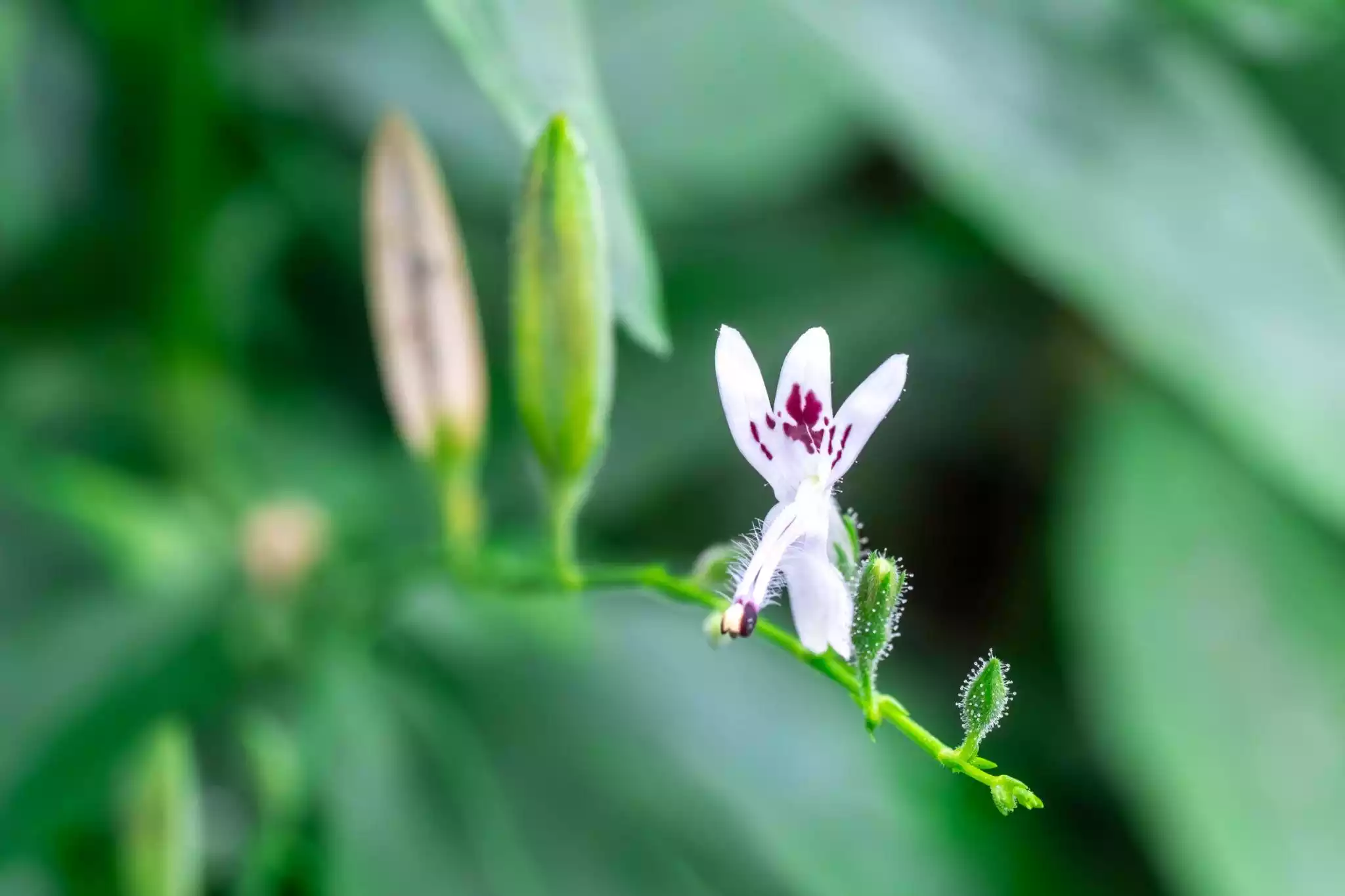
Andrographis paniculata is a plant belonging to the Acanthaceae family and is widely recognised across South and Southeast Asia. It is known by several traditional names, including Kalmegh, Green Chiretta and Hempedu Bumi.
The plant has a long history of traditional use in various Asian cultures. Modern scientific research has also examined its naturally occurring compounds, particularly andrographolide, along with other diterpenoids and flavonoids found in the plant.
Today, interest in Andrographis paniculata extends beyond traditional herbal applications. Extracts derived from the plant are also being investigated for their potential use in cosmetic and skincare formulations, particularly because of the antioxidant and skin-related properties reported in scientific literature.
Why Is Andrographis Paniculata Interesting for Skincare?
The skin is constantly exposed to environmental factors such as ultraviolet radiation, pollution and other sources of oxidative stress. Because of this, cosmetic researchers continue to explore botanical ingredients containing naturally occurring antioxidant compounds.
Andrographis paniculata has attracted attention because its chemical profile contains several classes of phytochemicals, including diterpenoids, flavonoids and related compounds. Among these, andrographolide is one of the best-studied constituents of the plant.
Research reviews have discussed the antioxidant properties of andrographolide and its potential relevance to skin protection and cosmetic science. These findings have helped encourage further investigation into how Andrographis-derived ingredients may be incorporated into topical formulations.
The Role of Andrographolide
When discussing Andrographis paniculata, one compound appears frequently in scientific literature: andrographolide.
Andrographolide is a diterpenoid lactone naturally found in the plant. Studies have identified it as one of the major phytochemicals responsible for many of the biological activities associated with Andrographis paniculata. The amount and composition of phytochemicals can vary depending on factors such as the plant part used, geographical origin, harvesting conditions and extraction method.
From a cosmetic science perspective, andrographolide is of interest because researchers have investigated its antioxidant activity and interactions with pathways associated with oxidative stress. However, laboratory findings involving an isolated compound should not automatically be interpreted as proof that a finished cosmetic product will produce the same effect on the skin.
Antioxidant Properties and Skin Care
One of the main areas of interest surrounding Andrographis paniculata is its antioxidant potential.
Oxidative stress occurs when reactive molecules are produced faster than the body’s natural systems can manage them. In skin research, oxidative stress is of interest because environmental exposure, including ultraviolet radiation, can contribute to changes in skin structure and appearance.
Research on andrographolide has explored its antioxidant activity and its relationship with cellular pathways such as Nrf2, a pathway involved in cellular antioxidant responses.
This does not mean that applying an Andrographis-containing cosmetic product will prevent skin ageing or protect the skin from sun damage. Rather, it explains why the ingredient continues to attract scientific interest as a potential component of formulations focused on maintaining healthy-looking skin.
Andrographis Paniculata and Skin Conditioning
Cosmetic formulations often combine botanical extracts with moisturising, emollient and other conditioning ingredients to support the overall appearance and feel of the skin.
Andrographis paniculata is being explored as one of several botanical ingredients that may complement this type of formulation approach. Research into its compounds and skin-related activity has generated interest in applications involving skin appearance, environmental stress and the maintenance of skin condition.
The actual performance of a cosmetic product depends on much more than the presence of one ingredient. Extract concentration, extraction method, formulation technology, ingredient stability, delivery system and the combination of other ingredients can all influence the characteristics of a finished product.
What Does Research Say About Skin Ageing?
Andrographis paniculata has also appeared in research concerning skin ageing and skin structure.
A review of herbal-derived ingredients for cosmetic applications described research involving Andrographis paniculata extracts in models examining skin density, wrinkles and skin sagging. The review also discussed research into epidermal stem-cell activity and extracellular matrix-related processes.
These findings are interesting because they provide possible areas for continued cosmetic research. However, they should be interpreted carefully.
A laboratory experiment, an ex vivo skin model and a human cosmetic study are different types of evidence. Results obtained in one model cannot automatically be used to promise a specific outcome for every consumer.
For responsible skincare communication, it is more appropriate to say that Andrographis paniculata is being studied for its potential role in supporting skin appearance and skin condition rather than claiming that it reverses ageing or removes wrinkles.
A Botanical Ingredient Rich in Plant Compounds
Another reason Andrographis paniculata continues to attract scientific interest is its chemical diversity.
Research has identified a broad range of naturally occurring compounds within the plant, including:
- Andrographolide
- Neoandrographolide
- Other diterpenoids
- Flavonoids
- Flavonoid glycosides
- Quinic acid derivatives
- Xanthones
The composition of an extract can differ depending on which part of the plant is used and how the extract is prepared. Leaves, stems, roots and other plant materials do not necessarily contain identical concentrations of the same compounds.
This is particularly relevant in cosmetic formulation because the term “Andrographis paniculata extract” does not describe a single chemically identical material. Two extracts made using different processes may have different phytochemical profiles.

Why Formulation Matters
An ingredient’s scientific potential is only one part of developing an effective skincare product.
A cosmetic formulation needs to consider factors such as:
Ingredient concentration: The amount used can influence a formulation’s properties and the overall cosmetic experience.
Extraction method: Different extraction processes can produce extracts with different chemical compositions.
Stability: Botanical compounds may be affected by factors such as light, temperature, oxygen and the surrounding formulation.
Compatibility: Botanical extracts need to work appropriately alongside other ingredients in the formula.
Skin feel: Texture, absorption, fragrance and overall sensory characteristics are important to the consumer experience.
For this reason, information about an individual ingredient should not be treated as a guarantee of the performance of every product containing that ingredient.
What Can Consumers Look For in an Andrographis-Based Skincare Product?
When choosing a cosmetic product containing Andrographis paniculata extract, it can be useful to look at the complete ingredient list and the formulation as a whole, rather than focusing on one highlighted ingredient.
A well-formulated skincare product may combine botanical extracts with ingredients selected for hydration, conditioning, cleansing or other cosmetic functions.
Consumers should also remember that botanical does not automatically mean stronger or better. The quality of an ingredient depends on factors such as sourcing, extraction, standardisation, formulation and quality control.
Andrographis Paniculata in Modern Skincare
The growing interest in Andrographis paniculata demonstrates how traditional botanical knowledge and modern cosmetic research can intersect.
Its naturally occurring compounds, particularly andrographolide, have been studied extensively in scientific literature. Research has explored antioxidant activity, cellular pathways and potential applications related to skin protection and cosmetic science.
At the same time, more research is needed to understand how different Andrographis extracts behave in cosmetic formulations and how laboratory observations translate into consistent real-world cosmetic results.
This makes Andrographis paniculata an interesting botanical ingredient to watch — not because it should be treated as a miracle solution, but because its diverse phytochemistry provides researchers with several areas worth investigating.
Final Thoughts
Andrographis paniculata is a botanical ingredient with a long history and a growing place in modern ingredient research.
Its naturally occurring compounds, including andrographolide and various flavonoids and diterpenoids, have been investigated for antioxidant and other biological properties. Research also continues to explore how Andrographis-derived ingredients may be relevant to cosmetic formulations and the appearance and condition of skin.
While current research is promising and scientifically interesting, it is important to distinguish ingredient research from guaranteed cosmetic results. The performance of a finished skincare product depends on its complete formulation, ingredient concentration, manufacturing process and appropriate use.
For consumers interested in botanical skincare, Andrographis paniculata represents one example of how plant-derived ingredients continue to inspire research into new approaches to everyday skin care.
References
- Hossain, M. S., Urbi, Z., Sule, A., & Rahman, K. M. H. (2014). Andrographis paniculata (Burm. f.) Wall. ex Nees: A Review of Ethnobotany, Phytochemistry, and Pharmacology. The Scientific World Journal.
- Wong, C. K., et al. Andrographolide, a natural anti-inflammatory agent: An Update. Frontiers in Pharmacology.
- Simmonds, M. S. J., et al. Antioxidant Effects of Catechins (EGCG), Andrographolide, and Curcuminoids Compounds for Skin Protection, Cosmetics, and Dermatological Uses: An Update. Antioxidants. 2023.
- Recent Advances in Herbal-Derived Products with Skin Anti-Aging Properties and Cosmetic Applications. Cosmetics / PMC review.
- Andrographis paniculata (Burm. f.) Wall. ex Nees: An Updated Review of Phytochemistry, Antimicrobial Pharmacology, and Clinical Safety and Efficacy.
- National Pharmaceutical Regulatory Agency (NPRA), Malaysia. Guideline for Cosmetic Advertisement – Annex I, Part 10.