

Hyperpigmentation remains one of the most common skincare concerns worldwide. Whether caused by acne, sun exposure, inflammation, or hormonal changes, dark spots often persist long after the original skin concern has resolved. While exfoliating acids and retinoids are widely recognized for improving uneven skin tone, they are not suitable for everyone—particularly individuals with sensitive or compromised skin barriers.
This is why modern skincare formulations increasingly rely on targeted pigment-regulating ingredients that work beneath the skin’s surface without accelerating cell turnover. Among the most extensively studied botanical brightening ingredients is Glycyrrhiza uralensis extract, commonly known as Chinese licorice root extract.
Its most scientifically significant active compound, glabridin, has attracted considerable attention in dermatological research due to its ability to directly inhibit tyrosinase, the key enzyme responsible for melanin synthesis. Rather than removing pigmented skin through exfoliation, glabridin helps reduce the formation of new pigment at its biological source, offering a gentle yet effective approach to improving skin clarity.
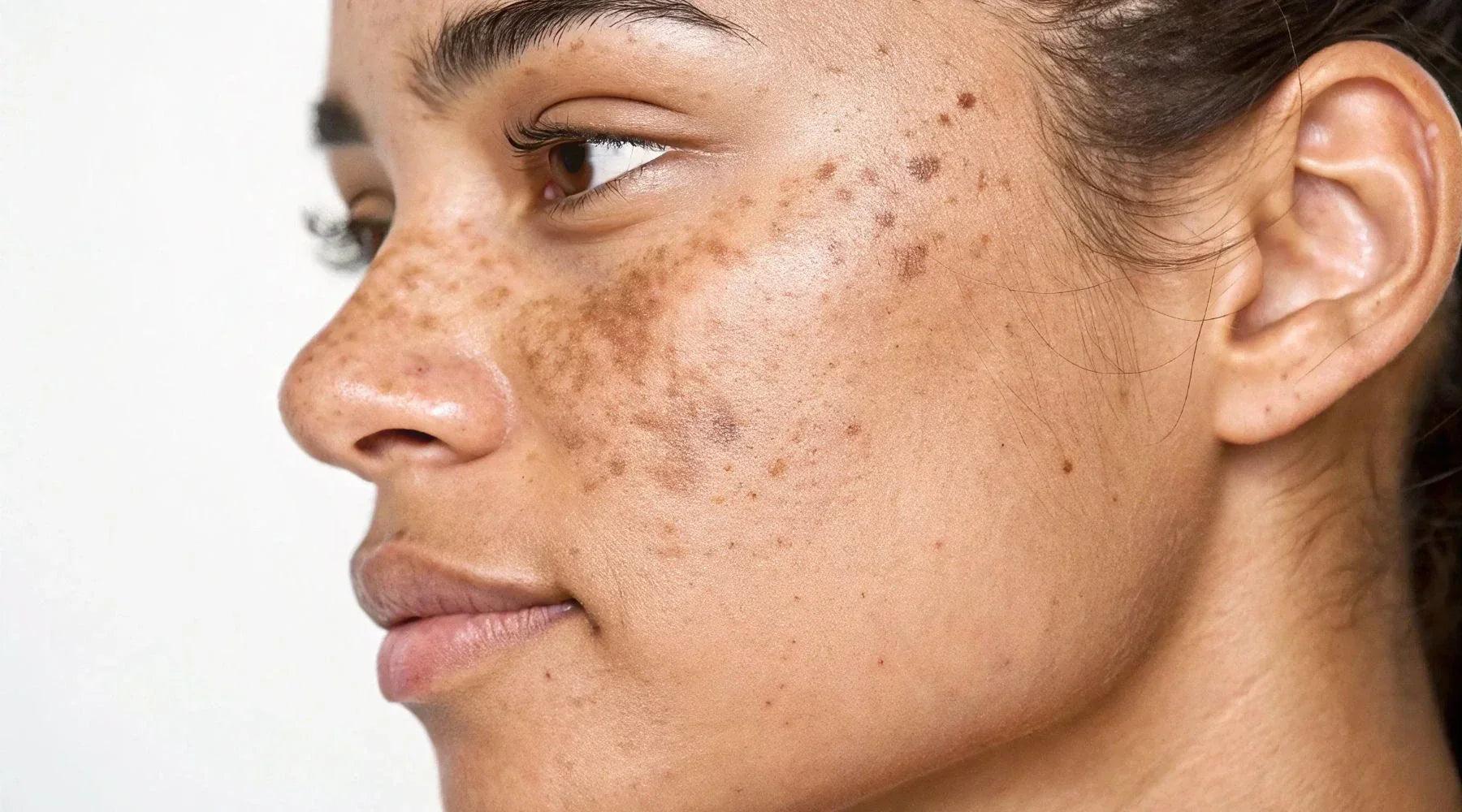
Understanding Hyperpigmentation: Why Dark Spots Form
Skin pigmentation is primarily determined by melanin, a natural pigment synthesized by specialized skin cells called melanocytes. Melanin serves an essential protective function by absorbing ultraviolet (UV) radiation and reducing DNA damage within skin cells.
However, excessive melanin production can result in uneven pigmentation, including:
- Post-inflammatory hyperpigmentation (PIH)
- Sun-induced age spots (solar lentigines)
- Uneven skin tone
- Acne marks
- Melasma (as part of a broader treatment approach)
The enzyme primarily responsible for initiating melanin synthesis is tyrosinase.
Because tyrosinase controls the rate-limiting step of melanogenesis, it has become one of the most important therapeutic targets in cosmetic dermatology.
Tyrosinase: The Enzyme Behind Melanin Production
Melanin production begins when the amino acid L-tyrosine is converted into L-DOPA and subsequently into dopaquinone. Both of these initial reactions are catalyzed by the enzyme tyrosinase.
Once activated, this biochemical pathway continues through several oxidation reactions that eventually produce eumelanin (brown-black pigment) and pheomelanin (yellow-red pigment).
Because tyrosinase controls the earliest stage of this pathway, reducing its activity limits the amount of melanin produced before pigmentation even develops.
Instead of attempting to remove existing pigment through exfoliation alone, inhibiting tyrosinase addresses hyperpigmentation at its biochemical origin.
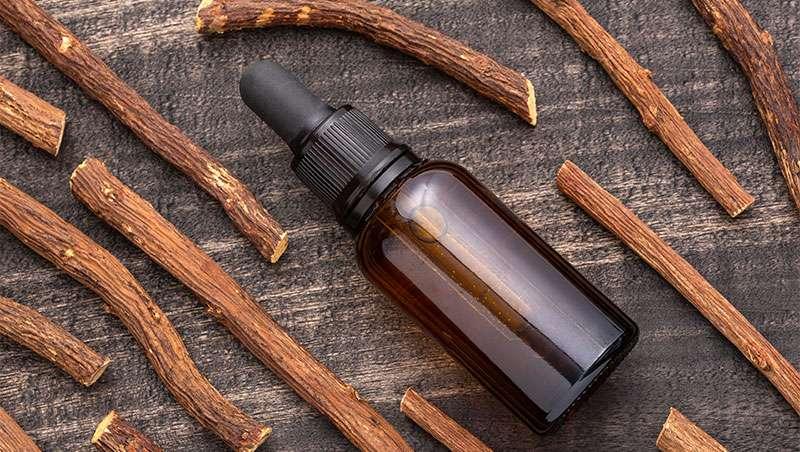
Glabridin: The Active Brightening Compound in Glycyrrhiza Uralensis
Although licorice root contains numerous flavonoids and polyphenols, the compound most responsible for its skin-brightening properties is glabridin.
Glabridin is a naturally occurring isoflavan that has been extensively investigated for several dermatological benefits, including:
- Tyrosinase inhibition
- Antioxidant protection
- Anti-inflammatory activity
- Reduction of UV-induced pigmentation
Among these functions, its ability to suppress tyrosinase activity is considered its primary mechanism for cosmetic skin brightening.
How Glabridin Interrupts Tyrosinase Activity
Unlike exfoliating acids that remove pigmented skin cells from the surface, glabridin acts directly within the melanogenesis pathway.
Scientific studies demonstrate that glabridin inhibits tyrosinase by interacting with the enzyme responsible for catalyzing melanin synthesis. By reducing the enzyme’s catalytic activity, less L-tyrosine is converted into the intermediate compounds required to produce melanin.
This interruption leads to:
- Reduced melanin synthesis
- Slower formation of new pigmentation
- Gradual fading of existing dark spots as normal skin renewal occurs
- Improved overall skin brightness and tone
Importantly, glabridin accomplishes this without damaging melanocytes or suppressing normal skin renewal, making it a gentler alternative to many aggressive depigmenting treatments.
A Non-Exfoliating Approach to Skin Brightening
Many brightening ingredients rely on accelerated exfoliation.
Common examples include:
- Alpha hydroxy acids (AHAs)
- Beta hydroxy acids (BHAs)
- Retinoids
While highly effective, these ingredients may temporarily compromise the skin barrier or increase irritation in individuals with sensitive skin.
Glabridin works differently.
Because it reduces pigment production instead of increasing skin shedding, it offers several advantages:
- Does not increase epidermal turnover
- Does not chemically exfoliate the skin
- Supports gradual brightening with minimal irritation
- Suitable alongside barrier-repair skincare routines
- Can complement other pigment-correcting ingredients
This mechanism makes licorice-derived glabridin particularly valuable for individuals who experience redness or irritation with stronger resurfacing treatments.
Beyond Brightening: Anti-Inflammatory Benefits That Help Prevent Future Pigmentation
One reason post-inflammatory hyperpigmentation develops is prolonged skin inflammation.
Inflammatory mediators released after acne, irritation, or environmental stress can stimulate melanocytes, leading to excess melanin production.
Glabridin possesses notable anti-inflammatory properties that may help reduce this secondary stimulation.
Research has shown that licorice-derived compounds can help regulate inflammatory pathways and reduce oxidative stress generated by UV exposure and environmental aggressors. By calming inflammation while simultaneously suppressing tyrosinase activity, Glycyrrhiza uralensis extract provides a multifaceted strategy for maintaining a more even complexion.
Antioxidant Protection Supports Long-Term Skin Clarity
Ultraviolet radiation and pollution generate reactive oxygen species (ROS), which contribute to oxidative stress within the skin.
Oxidative stress has been associated with increased melanogenesis by activating signaling pathways that stimulate melanin production.
Glabridin exhibits antioxidant activity capable of helping neutralize free radicals before they trigger these pigmentation pathways.
Although sunscreen remains the most important defense against UV-induced pigmentation, antioxidant ingredients such as glabridin provide an additional layer of protection by helping minimize oxidative triggers associated with uneven skin tone.
Where Glycyrrhiza Uralensis Extract Fits Within a Daily Skincare Routine
Because glabridin works through enzyme inhibition rather than exfoliation, it can be incorporated into both morning and evening skincare routines.
For optimal results, it should be paired with:
- Daily broad-spectrum sunscreen to prevent new UV-induced pigmentation
- Hydrating products that maintain a healthy skin barrier
- Consistent long-term use, as pigment correction occurs gradually through normal skin renewal
Visible improvements typically require several weeks of consistent application, depending on the severity and underlying cause of hyperpigmentation.
Featured Products Containing Glycyrrhiza Uralensis Extract
Mousse Cleanser – Calming, Purifying Cleansing Gel
Daily cleansing is the first step in maintaining healthy, balanced skin. The inclusion of Glycyrrhiza uralensis extract helps provide calming antioxidant support while introducing a gentle tyrosinase-inhibiting botanical during the cleansing process. Although cleansers have relatively short contact times with the skin, they contribute to an overall brightening routine by supporting skin comfort and reducing environmental residue.
Crystal Gel Mask – Skin Repair
Designed to support compromised or stressed skin, this gel mask combines hydration with soothing botanical ingredients. The presence of Glycyrrhiza uralensis extract provides additional support for improving uneven skin tone by helping regulate melanin production while calming inflammation that may contribute to post-inflammatory hyperpigmentation.
Crystal Gel Mask – Oily & Acne
Acne-prone skin frequently develops post-inflammatory hyperpigmentation after blemishes heal. Incorporating Glycyrrhiza uralensis extract into this targeted gel mask provides a dual benefit—helping soothe inflammation associated with acne while supporting gradual fading of residual acne marks through tyrosinase inhibition.
The Science Behind Gentle Brightening
Not all brightening ingredients need to exfoliate the skin to produce visible improvements.
By targeting tyrosinase, the key enzyme responsible for initiating melanin synthesis, glabridin from Glycyrrhiza uralensis extract offers a scientifically supported, non-exfoliating approach to improving skin clarity. Combined with its antioxidant and anti-inflammatory properties, this botanical active helps address multiple contributors to uneven skin tone while remaining suitable for many skin types, including those prone to sensitivity.
When incorporated into a consistent skincare routine alongside daily sun protection, products containing Glycyrrhiza uralensis extract can help support a brighter, more even-looking complexion through one of the most well-established mechanisms in cosmetic science.
References
- Briganti S, Camera E, Picardo M. Chemical and instrumental approaches to treat hyperpigmentation. Pigment Cell Research. 2003;16(2):101–110.
- Fu B, Li H, Wang X, Lee FSC, Cui S. Isolation and identification of flavonoids in licorice and a study of their inhibitory effects on tyrosinase. Journal of Agricultural and Food Chemistry. 2005;53(19):7408–7414.
- Yokota T, Nishio H, Kubota Y, Mizoguchi M. The inhibitory effect of glabridin from licorice extracts on melanogenesis and inflammation. Pigment Cell Research. 1998;11(6):355–361.
- Draelos ZD. Skin lightening preparations and the hydroquinone controversy. Dermatologic Therapy. 2007;20(5):308–313.
- Kim YJ, Uyama H. Tyrosinase inhibitors from natural and synthetic sources: structure, inhibition mechanism and perspective for the future. Cellular and Molecular Life Sciences. 2005;62(15):1707–1723.
- Hearing VJ. Determination of melanin synthetic pathways. Journal of Investigative Dermatology. 2011;131(E1):E8–E11.
- Kameyama K, Sakai C, Kondoh S, et al. Inhibitory effect of magnesium L-ascorbyl-2-phosphate and other whitening agents on melanogenesis. Journal of the American Academy of Dermatology. 1996;34(1):29–33.
- Mukherjee PK, Bahadur S, Harwansh RK, et al. Development of natural products for cosmetic applications: licorice and its bioactive constituents. Journal of Cosmetic Dermatology. 2022;21(10):4535–4548.